Many dogs pull because pulling works. It gets them to smells, people, dogs, grass, and motion. Training changes that pattern by making a slack leash more rewarding and predictable.
Reward the position you want
Start in a quiet place. Stand still, wait for the leash to soften, mark that moment, and reward near your leg. Take one step. If your dog stays with you, mark and reward again. At first, you may reward every step or two. That is normal.
Reward placement teaches geography. If treats always appear in front of your knees, your dog learns that being near you is valuable. If treats appear after pulling you to a smell, pulling stays valuable.
Use tiny walking drills
- One-step reset: take one step, click or mark the moment the leash goes slack, then reward by your leg.
- U-turn game: turn before the leash tightens, then reward your dog for catching up.
- Sniff release: reward a few good steps with permission to sniff a safe spot.
- Distraction distance: move farther away until your dog can think again.
Create a short leash lesson in the Daily Path, then note the location and biggest distraction after the walk.
Let your journal reveal the pattern
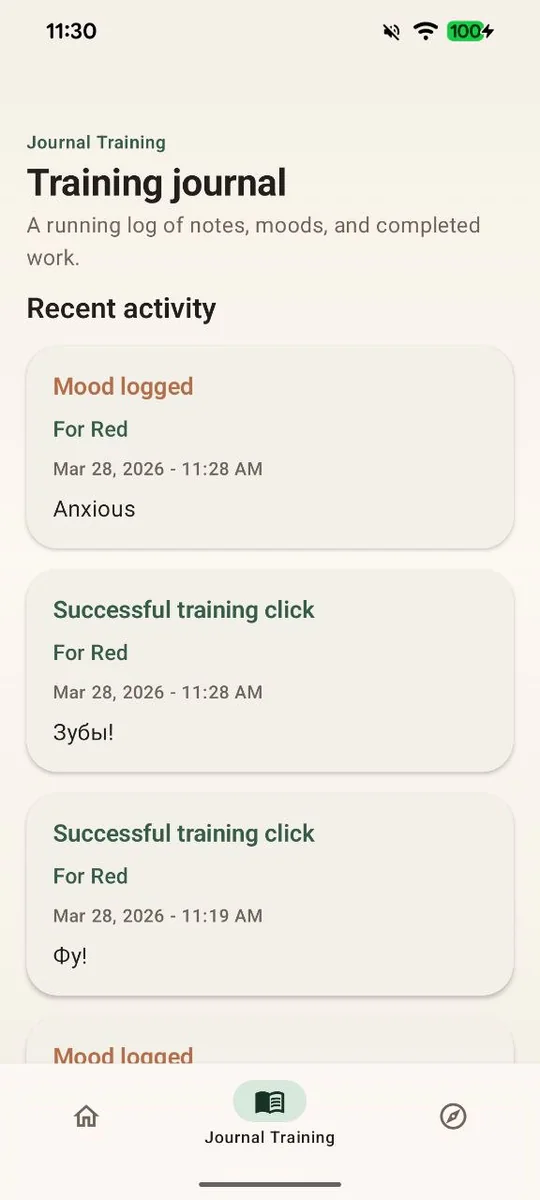
Loose leash progress depends heavily on environment. A dog may walk beautifully on a quiet block and struggle near a school, park, or another dog. Use GoodBoy journal notes to track where pulling happens, what reward worked, and how long your dog stayed connected.
When you see the pattern, you can train at the right difficulty instead of hoping the next walk goes better.
Transfer slack-leash skills outside
Begin at the distance where your dog can still eat and notice you. Reward a few loose steps, pause before the lead tightens, and turn the walk into a sniffing break when the environment is too difficult. Progress is measured by recoverable choices, not by walking a fixed distance without stopping.
Use one consistent response when pulling starts, and let every person who walks the dog practise the same pattern. A short note about route, trigger, and reward will help you choose the next manageable outing.
Choosing equipment that helps rather than hides the problem
| Equipment | Good for | Watch out for |
|---|---|---|
| Flat collar | ID tags, calm walkers | Pressure on the neck if the dog pulls hard |
| Back-clip harness | Comfort, long lines, small dogs | Can make pulling easier for strong dogs |
| Front-clip harness | Reducing pulling while you train | Needs a good fit so it does not rub under the legs |
| Fixed 1.8–2 m leash | Clear, consistent slack | — |
| Retractable leash | Rarely useful for training | Teaches that pulling extends the leash |
Equipment manages the walk; it does not teach position. Pair any harness with the reward drills above, and avoid tools that work by causing pain or discomfort, such as prong or choke collars.
Split the walk into "training" and "sniffing" parts
Dogs need to sniff, and asking for perfect position for a whole hour is unrealistic. Use a cue such as "go sniff" to release your dog to explore on a loose leash, then call them back to your side for a short, well-paid training stretch. Clear rules make both parts easier to enjoy.
FAQ
Should I stop every time my dog pulls?
Stopping can help, but it works best when paired with rewarding slack-leash movement and practicing before the leash gets tight.
Can sniffing be a reward?
Yes. For many dogs, sniffing is powerful. Use a few steps of loose leash walking to earn access to a safe sniff spot.