House training is a management project before it is a training project. Puppies need enough outdoor chances to get it right, and owners need enough notes to see when those chances should happen.
Use predictable potty timing
Take your puppy out after waking, after meals, after drinking, after active play, before crate time, and before bed. Reward immediately after outdoor success. Do not wait until you are back inside, because the puppy may connect the reward with coming indoors instead of going potty outside.
Choose a consistent potty area when possible. Familiar smells can help the puppy understand the job faster.
Prevent accidents with better supervision
When your puppy is loose indoors, they should be supervised. If you cannot supervise, use a safe confinement option matched to your puppy's comfort and training level. Watch for sniffing, circling, sudden wandering, or leaving the room. These are often signs that a potty trip is needed.
Set reminders around meals and naps, then use journal notes to track the time between outdoor success and accidents.
Treat accidents as data
An accident means the plan needs an adjustment. Maybe the interval was too long. Maybe play went on too late. Maybe the puppy had too much freedom after drinking. Write down the time, location, and what happened before it.
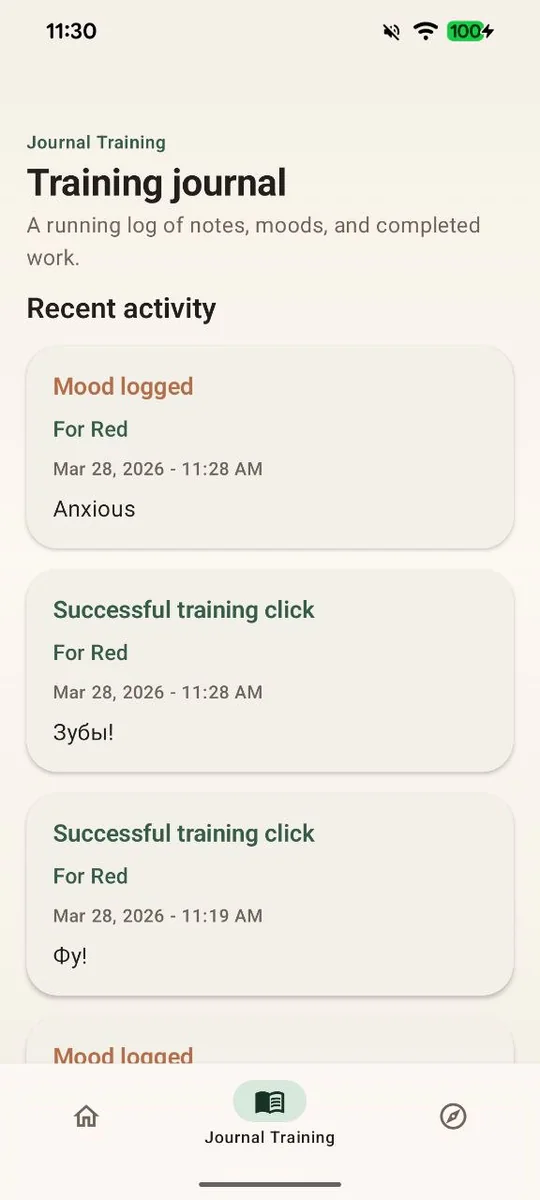
Patterns turn house training from guesswork into a schedule. GoodBoy's journal gives those notes a consistent place to live.
Plan for nights, weather, and schedule changes
A puppy’s usual timing can shift after sleep, food, play, visitors, or a long car ride. On those days, shorten the interval between toilet trips and supervise more closely instead of waiting for the normal clock to be right. Take the puppy to the same place when possible and reward immediately after finishing.
Clean accidents with an appropriate enzymatic product and review the preceding minutes without blame. Repeated accidents, pain, straining, or a sudden change deserve veterinary advice.
A sample house-training day for a young puppy
Most young puppies need a toilet trip after waking, after eating or drinking, after play, and before being left. A day for a 10–12-week-old puppy often looks like this:
| Time | What happens |
|---|---|
| Wake-up | Straight outside, carried if needed. Reward within a second of finishing. |
| After breakfast | Outside again 10–20 minutes later. |
| Every 1–2 hours while awake | A short, boring trip to the same spot. No play until after. |
| After naps and play | Outside first, then back to the activity. |
| Last thing at night | A calm trip before the crate or bed. |
| Overnight | One quiet trip if the puppy wakes and fusses; lights low, no games. |
Log each trip for the first week — time, success or not, and any accident. After a few days the log shows your puppy's real rhythm, and you can stretch the gaps slowly.
When progress stalls
If accidents keep happening in the same room, block access or supervise more closely there. If a puppy that was reliable suddenly regresses, drinks much more than usual, or strains to urinate, speak to your vet — a urinary infection or other medical issue can look like a training problem.
FAQ
How long does house training take?
It varies by age, routine, supervision, health, and consistency. Focus on improving the schedule rather than chasing a fixed timeline.
What should I do after an accident?
Clean it thoroughly, avoid punishment, and adjust the next few hours of supervision and potty timing.